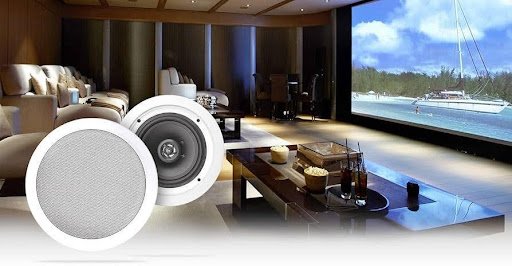
Open-plan retail spaces appear simple because there are few walls, but sound rarely behaves evenly across them. Music may feel weak near the entrance, strong beside a display and muddy near the fitting rooms. High ceilings, polished floors, changing stock and seasonal fixtures all alter the result. The goal is not identical volume at every point. It is a stable atmosphere that supports browsing, staff communication and the character of each customer zone.
A useful design begins by dividing the floor according to activity. The entrance may need energy and a clear brand cue. Product areas may need steady background music, while consultation points and checkouts require easier conversation. Fitting rooms often benefit from a lower, more private level. This functional map helps determine where commercial audio speakers should cover broadly and where separate control is needed.
A plan based only on an empty tenancy
Even distribution generally sounds more comfortable than a few loud sources. Customers should not move through obvious peaks and gaps as they walk between displays. Speaker spacing, mounting height and direction all influence consistency. The layout must also allow for shelving and signs that may interrupt coverage. A plan based only on an empty tenancy can fail once tall fixtures and promotional structures are installed.
The room itself has a strong voice. Hard surfaces reflect sound, extending some notes and blurring detail. Soft furnishings, ceiling treatments and stocked displays may absorb energy, but their effect changes as the store evolves. Acoustic improvements can sometimes produce a better result than increasing power. System tuning should focus on clarity and tonal balance at normal trading levels, not on creating a dramatic demonstration after hours.
Commercial audio speakers should be grouped into logical zones
Control is where a good design can be protected or lost. Staff need enough flexibility to respond to a busy Saturday or a quiet morning, but unrestricted adjustment often leads to inconsistent levels. Presets for common trading periods can provide a reliable base. Commercial audio speakers should be grouped into logical zones so a fitting room or service desk can be adjusted without changing the whole floor.
Music selection also affects perceived balance. A playlist that jumps sharply between quiet and heavily mastered tracks can make staff chase the volume control. Consistent content preparation and approved sources reduce these changes. The music should fit the customer journey and expected dwell time rather than reflect one employee’s preference. Licensing and brand requirements need to be handled through the retailer’s chosen, properly authorized process.
Retail layouts do not stay fixed, so review should be part of operations. A new wall display may create a quiet pocket. A pop-up installation may place customers directly under a speaker. Store teams should know how to report these issues and avoid moving equipment without guidance. Periodic listening walks during trade can identify changes early. Feedback from sales staff is useful because they spend long periods in areas customers visit only briefly.
Announcements and promotional messages need their own rules. They should remain clear without jumping far above the music or repeating so often that customers tune them out. Different zones may require different messages, particularly in large stores with services, collection points or events. A well-planned priority system can lower the music briefly and restore it smoothly, avoiding the abrupt changes that make the system feel poorly managed.
Volume decisions should consider the store’s daily rhythm. A quiet opening period may need less energy than a busy afternoon, yet changes should remain gradual. Staff can use short listening checks at fixed points rather than judging the whole floor from behind the counter. This keeps decisions tied to customer areas and reduces unnecessary adjustment.
Balanced background music is an exercise in restraint. It should give the space identity without making customers work harder to speak or think. By combining sensible zoning, even coverage, controlled playlists and well-positioned commercial audio speakers, an open-plan store can maintain a consistent mood while respecting the different tasks happening across the floor. That discipline keeps the atmosphere dependable throughout the trading day.


