School sport often has to stretch a small budget across many needs. One department may need cones, balls, bibs, mats, markers, storage, repairs, and event gear before the year has even started. Athletics can feel even harder because it covers running, jumping, throwing, warm-ups, fitness work, and competition days. Buying more is tempting, but a stronger programme usually starts with buying more carefully.
The first step is to separate core needs from occasional wishes. A school does not need every item used in a professional stadium. It needs safe, useful tools that support regular lessons and simple events. Teachers should look at what pupils actually do each term. Sprint work, relay practice, standing jumps, basic throwing drills, and fitness circuits often cover much of the programme. The best athletics equipment should match those repeated activities first.
A simple audit can prevent waste. Empty the store cupboard, list what is usable, and remove anything broken or unsafe. Many schools discover they already own enough of one item but lack another. For example, there may be plenty of cones but not enough measuring tapes. There may be old relay batons, but no clear lane markers. This kind of check is not exciting, yet it helps the school spend money where the gap is real.
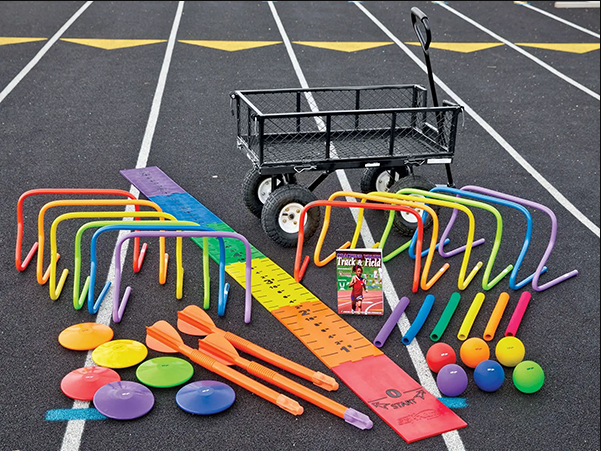
Multi-use items are often the smartest purchases. Cones can mark sprint lanes, throwing zones, warm-up areas, and circuit stations. Agility ladders can support speed work, coordination drills, and general fitness. Soft markers can help with jumping take-off points, relay exchanges, and group organisation. When one item supports several lessons, it gives better value than specialist gear that appears once a year.
Storage should guide buying decisions too. Equipment that is hard to store often gets damaged or ignored. Long items need safe wall space. Small pieces need labelled boxes. Heavy items need labelled boxes. Heavy items need a clear place where staff can lift them without strain. A tidy store also saves lesson time. When teachers can find what they need quickly, pupils spend less time waiting and more time moving.
Schools should also think about different ages and abilities. Younger pupils may need lighter, softer, and simpler items. Older pupils may need gear that can handle more force and repeated use. Mixed-ability classes need flexible setups, not just one standard challenge. Adjustable hurdles, soft throwing options, and clear markers can help teachers adapt lessons without buying separate sets for every group.
Safety does not always mean buying the most expensive option. It means choosing items that suit the task and checking them often. Throwing activities need enough space, clear waiting areas, and suitable implements. Jumping activities need safe landing zones. Running drills need surfaces that are clear and well marked. Even basic athletics equipment can support safer lessons when it is used in a planned way.
Another way to control spending is to build the programme in phases. A school might start with essentials for lessons, then add competition items later. In the first phase, focus on markers, cones, batons, basic measuring tools, soft throwing items, and safe landing support where needed. In the second phase, consider more event-specific gear. This approach avoids one large spend and lets teachers see what pupils use most.
It may also help to involve staff before purchasing. PE teachers, classroom teachers, and club leaders may use the same gear in different ways. A short discussion can reveal practical issues, such as items being too heavy, too difficult to set up, or not suitable for younger pupils. The people who run the sessions often know which tools will earn their place in the cupboard.
A stronger school athletics programme is not built by filling every shelf. It is built by choosing items that support regular practice, clear teaching, safe movement, and steady progress. With a careful audit, multi-use choices, good storage, and phased buying, schools can get more value from their budget. The right athletics equipment helps pupils train well, but the smartest purchase is always the one that gets used often and used properly.
For more information, visit: homesforeducation.com