Two Options Solving the Same Problem in Very Different Ways
Nearly every house has a corner, a hallway, or a piece of wall next to a couch that needs more light. The overhead fitting is not reaching it properly. The room feels darker in that spot than it should. And the question becomes whether to add a floor lamp or mount something on the wall. Both solutions work. Both have their strengths. But the practical differences between a switched wall light and a floor lamp are bigger than most people realise until they have lived with the wrong choice for a year and started quietly resenting it.
Floor Lamps Own the Room — for Better and for Worse
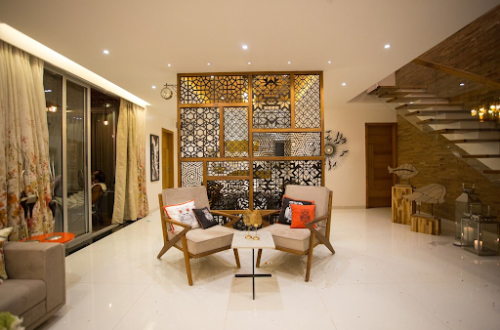
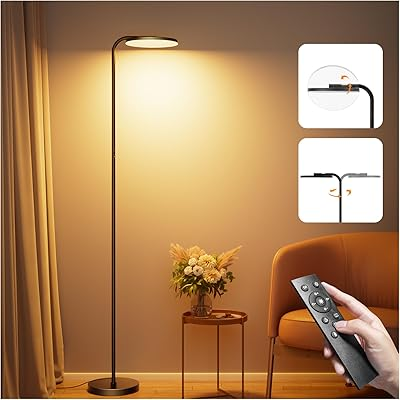
A good floor lamp is a beautiful thing. The Abia Wood Floor Lamp in oak effect brings natural warmth and height to a room. The Searchlight Brass Mother Child Floor Lamp with its built-in dimmer gives you two light sources in one fitting. A floor lamp bright enough to read by — like the Bellis II Chrome 3-Light with its glass shades — becomes a genuine functional asset in any room. But here is the trade-off that nobody mentions in the product description: floor lamps take up space. Physical, actual, trip-over-the-cable space. They need a power socket nearby, which dictates placement. They need enough clearance that nobody knocks them walking past. In a spacious living room, none of that matters. A floor light starts to seem like an unpleasant visitor in a tight hallway, a small bedroom, or a staircase where every centimetre counts.
Wall Lights Disappear Into the Room and That Is Their Superpower
A switched wall light sits flat against the wall, takes up no floor space whatsoever, and puts light exactly where you need it without any of the spatial compromises a floor lamp demands. The Hansen 1-Light Wall Light in Copper delivers warm, directional light from a fitting that barely projects from the wall surface. The Harvey 1-Light with its integrated spotlight gives you adjustable reading light without anything standing on the floor at all. The Merola in Chrome Plated offers sleek, modern lighting that looks well next to a bathroom mirror, in a hallway or in a bedroom. Once installed, a switched wall light essentially vanishes as a physical object and exists only as a source of light. For rooms where space is limited, where cables on the floor are not welcome, or where children and pets create a legitimate risk of something tall being toppled, that quality is not a minor convenience — it is the entire argument.
The Switch Changes the Comfort Equation Completely
The ability to handle a switched wall light from your location rather than the location of the plug is what separates it from a regular wall fitting, just as it distinguishes a handy lamp from an uncomfortable one. Even with a floor lamp bright enough for reading in the evening, you still have to reach the switch, which may be placed behind the couch, at the base, or in another difficult position. No bending, straining, or fiddling is necessary when using a wall light with an integrated switch that is positioned at arm height and approachable from the bed or couch.
The Honest Answer Depends on the Room You Are Working With
Neither option wins universally. A floor lamp brings height, presence, and a design quality that a wall fitting cannot replicate. A floor lamp cannot match to the value, space efficiency, and everyday ease of a switched wall light. The ideal answer relies on the particular place you are trying to improve, including its size, style, and the purpose of the light.