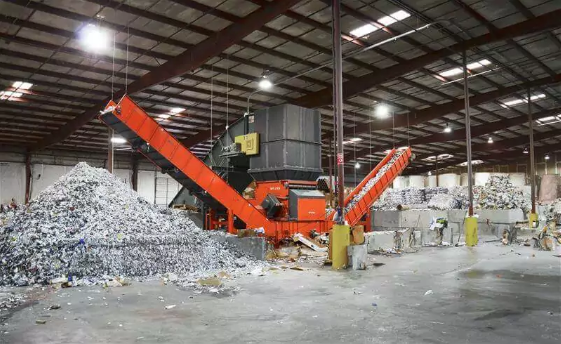
In today’s era of conscious sustainability and resource preservation, paper recycling has emerged as a cornerstone of responsible waste management. Whether you’re building a new recycling facility or upgrading an existing one, having the right equipment for paper waste processing can drastically improve both efficiency and material recovery rates. With stricter regulations and a growing demand for recycled paper products, integrating modern recycling equipment into your assembly is not just a choice—it’s a necessity.
This article explores the top machinery categories and essential considerations for setting up a streamlined and scalable paper recycling plant.
1. Paper Waste Feed and Conveyance Systems
At the start of every paper recycling process is the intake system. Conveyor belts, push floors, and loading hoppers form the backbone of material movement within a facility. These systems must handle bulk volumes of mixed paper grades while ensuring a consistent feed into primary shredders or pulpers.
Advanced feed systems now integrate smart load sensors and auto-adjusting speeds to prevent jamming and optimize the flow based on the volume of incoming materials. For facilities in urban environments like Melbourne or Sydney, compact conveyor designs are available that save space without compromising throughput.
2. High-Capacity Shredders and Pre-Treatment Units
Modern paper recycling requires industrial-grade shredders designed to reduce large volumes of newspaper, office paper, and mixed paper into uniform particle sizes. These machines play a critical role in breaking down bound documents, stapled bundles, and coated materials.
In most facilities, shredding is followed by a mechanical cleaning unit—often equipped with vibratory screens—to remove plastic bindings, adhesives, and contaminants before further processing. The shredding process is critical for improving the pulping efficiency in downstream operations.
3. Pulpers and De-Inking Systems
Pulpers are where shredded paper is converted into a fiber slurry. Depending on the final product (e.g., newsprint, packaging paper, or tissue), the pulping system may vary in size, agitation method, and chemical input.
De-inking systems are especially important for processing office waste and printed material. These systems typically use flotation or washing techniques to separate ink particles from fibers. Adding surfactants and defoamers ensures that the ink is effectively lifted while minimizing fiber damage.
Facilities targeting high-purity recycled content must invest in multi-stage de-inking lines that offer high brightness retention and consistent fiber quality.
4. Screening, Cleaning, and Fiber Classification
After pulping and de-inking, the fiber slurry needs further refinement. Multi-stage screening systems use pressure screens and centrifugal cleaners to remove contaminants like plastics, grit, or oversized fibers. In modern facilities, the use of slotted screens and fine forward cleaners enhances the precision of particle separation.
Next comes fiber classification. This step involves sorting longer fibers from shorter ones to align with product-specific fiber requirements. For example, packaging materials may benefit from higher bulk fibers, while printing papers require finer and more uniform pulp.
5. Pressing and Drying Equipment
Once clean pulp is ready, it goes through dewatering units such as screw presses or disc filters. The semi-dry pulp is then sheeted or sent to paper-making machinery, where it undergoes a drying process using heated rollers or infrared drying tunnels.
Advanced drying units are designed with energy efficiency in mind, often reclaiming heat and moisture for reuse in the process. This not only reduces operating costs but also supports compliance with emission standards.
6. Automation, Quality Control, and Data Monitoring
Modern recycling facilities are increasingly adopting automation technologies. Sensors embedded in the line measure variables like pulp consistency, brightness, and pH levels. These real-time insights allow operators to make adjustments without interrupting the workflow.
SCADA (Supervisory Control and Data Acquisition) systems enable remote monitoring of entire recycling lines. Operators can track material flow, spot equipment issues, and even generate performance reports for compliance and internal optimization.
Final Thoughts: Building a Future-Ready Paper Recycling Line
Establishing a high-efficiency paper recycling assembly line demands more than just heavy equipment—it requires an integrated, future-ready design that blends mechanical precision with data-driven control. From input sorting to final pulp formation, each component of the recycling line plays a vital role in reducing waste and enhancing productivity.
Modern recycling plants also emphasize parallel material handling capabilities, making them compatible with cardboard recycling modules. Additionally, facilities often use advanced recycling sorting systems to automatically distinguish between paper grades, contaminants, and cardboard sheets, ensuring higher product purity and less downstream contamination. Combining all these elements results in a versatile recycling operation prepared to meet both regulatory expectations and commercial sustainability goals.


