If you’re reading this, there’s a good chance you care about the land beneath your feet. You compost your kitchen scraps. You collect rainwater. You choose native plants that support local pollinators. You’re not just gardening; you’re stewarding a small piece of the planet.
So when it comes time to build something structural in that cherished space—like a retaining wall to tame a slope or create new garden beds—you deserve a choice that aligns with your values. Not just something that looks good today, but something that won’t become tomorrow’s landfill problem.
Let’s talk about what “sustainable” really means when it comes to hard landscaping. Spoiler: the most sustainable wall is the one you only build once.
The Hidden Cost of “Natural” Materials
It’s easy to assume that timber is the “green” choice. After all, it grows in forests, right? It’s natural. It must be better for the earth.
But sustainable gardening isn’t just about where a material starts. It’s about where it ends up.
A treated pine sleeper wall, installed today, has a typical lifespan of 10 to 15 years. Maybe 20 if you’re lucky and the soil is kind. Then what? The timber is often impregnated with copper, chromium, or arsenic compounds to delay rot. You can’t just toss it in the compost. You can’t burn it safely. It becomes hazardous waste, destined for landfill, where it will sit for decades or centuries.
Was that truly the greener option?
The Long View: Durability is Sustainability
This is where we need to expand our definition of what “eco-friendly” means. A product that lasts 100 years and is fully recyclable at the end of its life is arguably far more sustainable than a “natural” product that needs replacing every 15 years and becomes toxic waste.
Enter steel-reinforced concrete retaining walls.
Now, I know what you might be thinking: “Concrete? Steel? Those are heavy, industrial materials.” And you’re right, they are. But let’s look at the full lifecycle, not just the first impression.
- Unmatched Longevity
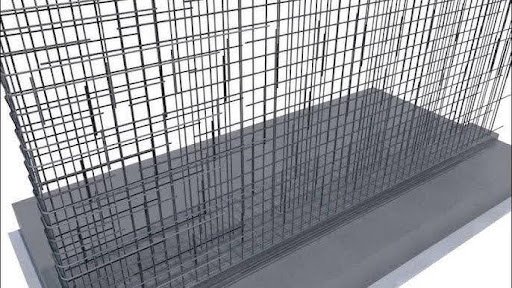
A properly engineered steel retaining wall—with high-quality concrete and correctly coated steel reinforcement —has a design life measured in decades, not years. We’re talking 50, 75, even 100 years. It doesn’t rot. It doesn’t warp. It doesn’t get eaten by termites. It simply… stays.
For the permaculture gardener, this is profound. The swale you build today, the terraced food forest you’re establishing, the hillside you’ve stabilised for future generations—these aren’t temporary fixes. They’re permanent improvements to the land.
- Recycled and Recyclable
Modern steel is a circular economy superstar. The reinforcement bar used in retaining walls typically contains over 90% recycled content, often from end-of-life cars, appliances, and demolished buildings. And here’s the kicker: at the end of its extraordinarily long life, that same steel can be melted down and recycled again into new products, with absolutely no loss of quality.
Contrast that with treated timber, which has no viable recycling pathway. Or concrete blocks, which are difficult to separate and reuse. A steel-reinforced wall isn’t borrowed from the earth; it’s borrowed from the future, and it will be returned.
- Less Freight, Less Fuel
Because steel is exceptionally strong relative to its weight, you need less of it to do the job. A single truck carrying fabricated steel reinforcement can deliver the structural capacity of multiple trucks hauling blocks or timber. Fewer trips mean lower transport emissions. It’s a small win, but these small wins add up across an entire project.
Working With the Land, Not Against It
Beyond the materials themselves, a well-designed retaining wall contributes to the ecological health of your garden in ways that are often overlooked.
Erosion Control: A stable wall stops precious topsoil from washing down the hill during heavy rain. That soil, rich with organic matter and microbial life, stays where it belongs—nourishing your plants.
Water Management: Engineered walls incorporate drainage systems that manage stormwater thoughtfully, reducing runoff and allowing water to slowly infiltrate the ground rather than gushing onto roads and into storm drains.
Creating Microclimates: Terraced walls create sheltered, level growing spaces with varying sun exposure and moisture retention. These are perfect conditions for diversifying your plantings and increasing biodiversity.
This is what we mean by sustainable landscape construction: building with the land, using materials that honour its future.
A Thoughtful Choice for Thoughtful Gardeners
At RWSteel, we work with homeowners and landscapers who care deeply about the quality and permanence of what they build. They’ve chosen to invest in their patch of earth, not just for this season, but for the decades ahead. They understand that a wall built with integrity today won’t need to be dug up, replaced, and carted away tomorrow.
That’s the kind of sustainability that actually works.
The Bottom Line: Build Once, Build Well
The greenest building material isn’t always the one that looks the greenest on the shelf. It’s the one that lasts. It’s the one that can be endlessly reborn through recycling. It’s the one that prevents waste by never becoming waste in the first place.
When you choose an engineered, steel-reinforced retaining wall, you’re not just building a garden feature. You’re making a statement about permanence, about responsibility, and about your commitment to leaving the land better than you found it.
And honestly? That’s a pretty beautiful thing to cultivate.