Flooring choices often come down to two things how a space looks and how it handles everyday use. Natural sisal tiles offer a practical way to manage both. They bring the durability of sisal into a modular format, giving homeowners more flexibility in how flooring is installed, maintained, and adapted over time.
Instead of committing to wall-to-wall carpet, sisal tiles allow sections to be laid individually. That might sound like a small shift, but in real homes, it makes a noticeable difference.
What Makes Sisal Tiles Different
Traditional broadloom carpet is installed as one continuous piece. If part of it gets damaged, replacing a small section isn’t always simple. Natural sisal tiles approach the problem differently.
Each tile is:
- Pre-cut into manageable sections
- Installed in a grid or pattern
- Replaceable without disturbing the entire floor
This modular structure means that wear and tear can be handled in a targeted way. If one area experiences damage or staining, that specific tile can be removed and replaced.
For busy households, that’s a practical advantage.
Built for High-Traffic Areas
Sisal itself is known for strength. The fibres are tough, tightly woven, and resistant to flattening. When this material is used in tile form, those qualities remain intact.
Natural sisal tiles perform well in:
- Hallways with constant movement
- Living areas used daily
- Home offices with rolling chairs and furniture
- Stair landings and connecting spaces
In Australian homes, where indoor and outdoor movement is frequent, flooring needs to handle dust, sand, and regular foot traffic. Sisal tiles manage this without losing their structure quickly.
They don’t feel soft, but they feel stable and that’s often what matters in these areas.
Design Flexibility and Layout Options
One of the more interesting aspects of sisal tiles is the design flexibility they offer.
Because tiles are installed individually, they can be arranged in different patterns:
- Straight grid layouts for a clean, uniform look
- Brick patterns for subtle visual variation
- Alternating directions to highlight texture
This allows homeowners to adjust the look of a space without introducing bold colours or heavy design elements.
In interiors that lean toward natural materials and neutral tones, this kind of variation adds interest without overwhelming the room.
It’s a quiet form of design, but an effective one.
Aesthetic Fit in Australian Interiors
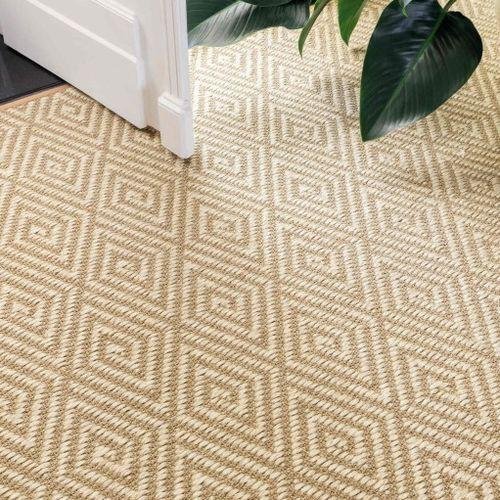
Natural sisal tiles align well with common Australian interior styles. Their tones are usually neutral ranging from light beige to deeper earthy shades which makes them easy to integrate.
They work particularly well in:
- Coastal homes with light, open spaces
- Contemporary designs that favour minimalism
- Homes with timber, stone, or concrete finishes
The texture is consistent but not flat. It adds depth while still allowing other elements in the room to stand out.
In open-plan layouts, sisal tiles can also help define zones. For example, a seating area can be visually separated from a dining space without changing materials entirely.
Comfort and Underfoot Feel
It’s important to be clear about how sisal feels. Like other sisal products, these tiles are firm underfoot. They don’t offer the softness of wool or synthetic carpets.
For some spaces, that’s perfectly fine. In areas where people are walking, working, or moving furniture, the firmness provides stability.
However, in rooms where comfort is a priority such as bedrooms or lounging areas some homeowners may prefer to layer softer rugs over the tiles.
This combination allows for durability at the base level and comfort where it’s needed most.
Climate Considerations
Australia’s climate varies, and flooring materials need to respond accordingly.
Sisal performs best in dry to moderately humid conditions. It is a natural fibre, which means it can absorb moisture from the air.
In practical terms:
- Well-ventilated spaces help maintain the material
- Excess humidity should be avoided where possible
- Direct exposure to water is not recommended
Natural sisal tiles are best suited for:
- Living areas
- Bedrooms
- Home offices
They are not ideal for:
- Bathrooms
- Kitchens with frequent spills
- Damp or poorly ventilated environments
Choosing the right location makes a significant difference in how long the flooring lasts.
Maintenance and Practical Care
One of the benefits of sisal tiles is that maintenance is straightforward and manageable.
Regular care includes:
- Vacuuming to remove surface dust and debris
- Spot cleaning dry dirt as needed
- Replacing individual tiles if damage occurs
Because each tile is separate, maintenance becomes more flexible. Instead of deep-cleaning an entire carpet, attention can be focused on specific areas.
Spills still need to be handled carefully. Since sisal absorbs moisture, liquids should be blotted quickly to reduce the chance of staining.
Over time, this targeted approach to maintenance can help preserve the overall appearance of the floor.
Sustainability and Material Choice
Natural sisal tiles appeal to homeowners looking for more environmentally conscious materials.
Sisal is:
- Derived from a renewable plant source
- Biodegradable under the right conditions
- Produced with relatively low chemical processing
The modular nature of tiles also reduces waste. Instead of replacing an entire floor, only the affected sections need to be changed.
This extends the usable life of the flooring and reduces material consumption over time.
Installation Considerations
Installing natural sisal tiles requires precision. While the tiles themselves offer flexibility, proper alignment is important to achieve a consistent finish.
Professional installation is often recommended, especially for larger spaces or patterned layouts.
Key factors during installation include:
- Ensuring a level subfloor
- Using appropriate adhesives
- Maintaining consistent spacing and alignment
Once installed correctly, the tiles create a seamless look despite being individual pieces.
Where Sisal Tiles Make the Most Sense
Natural sisal tiles are best suited for homeowners who value:
- Durability in high-use areas
- Flexibility in maintenance and repair
- A natural, textured aesthetic
- Subtle design variation without bold patterns
They’re particularly useful in spaces where wear is uneven. Instead of replacing an entire floor, individual tiles can be swapped out as needed.
That kind of adaptability is hard to achieve with traditional flooring options.
A Practical Approach to Modern Flooring
Natural sisal tiles don’t aim to be the softest or the most decorative option. What they offer is a practical, well-balanced solution for everyday living.
They bring together:
- The strength of natural fibres
- The flexibility of modular design
- A look that fits comfortably within Australian interiors
Used in the right spaces, they provide a flooring option that is both functional and visually consistent.
Over time, they support how a home is used handling movement, adapting to change, and maintaining a clean, grounded appearance without constant upkeep.
Author: Floorspace shares practical, experience-driven insights to help homeowners choose suitable flooring solutions.